The Flagstaff Septic Decision Framework
Conventional vs. Engineered Septic Systems in Flagstaff, AZ
It is not true that every septic-served Coconino County property needs an expensive engineered or alternative system. As of August 2026, Coconino County's own area-planning documents show Mountainaire's soils are rock and impervious (genuinely needing an engineered system) while Doney Park/Timberline/Fernwood's soils are deep and permeable (generally fine for a conventional one) — the two largest communities in this market, with opposite answers. Flagstaff Septic Pros can match you with a local contractor who can confirm which applies to your specific lot.
Why This Question Gets Asked So Often Here
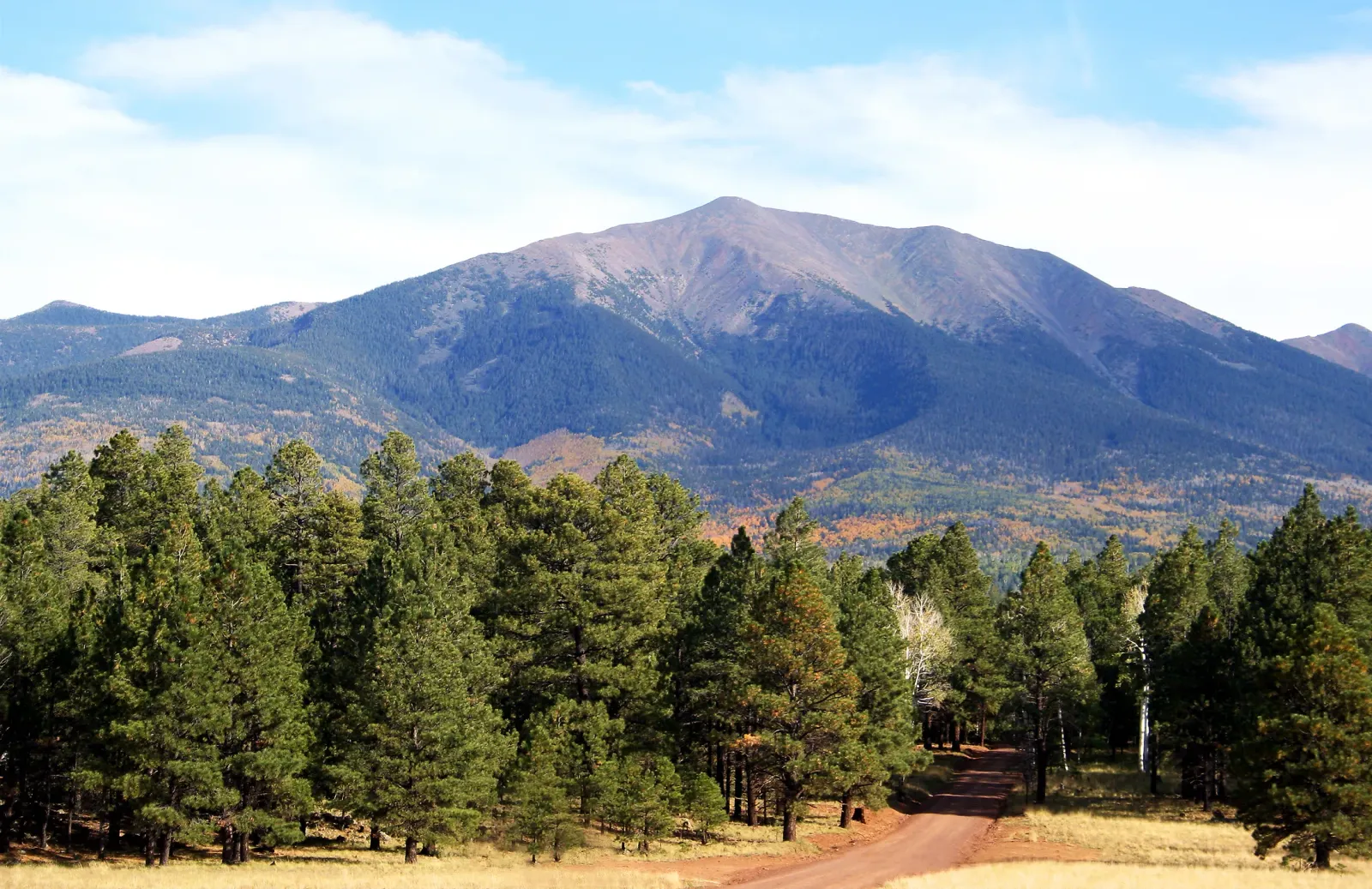
Flagstaff sits at the base of the San Francisco Peaks volcanic field, and a lot of local conventional wisdom treats "volcanic cinder soil" as a blanket reason every property here needs an expensive engineered system. That reputation isn't baseless — some Coconino County communities genuinely do have rock and impervious soils that won't support a standard leach field. But it isn't uniformly true either, and treating it as a blanket rule means some homeowners budget $20,000+ for a system their lot may never actually require, while others assume a cheap conventional install will work somewhere it genuinely won't.
We went looking for what Coconino County's own planning documents actually say about soil suitability, community by community, rather than repeating the blanket assumption. Two communities are documented clearly, at a primary-source level. The rest genuinely aren't documented yet — and we say so plainly below, rather than guessing.
Mountainaire — Documented Rock & Impervious Soils
Coconino County's Mountainaire Area Plan — a Comprehensive Plan amendment adopted December 16, 1991, and still the plan of record as of this writing — states directly, in its Wastewater section:
"Further constraints are the geological conditions in the area including rock and impervious soils which will not percolate."
The same document continues:
"For lots which cannot accommodate a conventional septic tank leach field system, an alternate on-site system may be acceptable."
In plain terms: if you own or are buying property in Mountainaire, plan on needing an engineered or alternative on-site system rather than a standard leach field. This isn't an edge case there — it's a real, county-plan-acknowledged expectation for the community. The same plan also notes Mountainaire has no community sewer (a proposal from the 1960s was never built) and that its subdivisions date to 1960–1964 — meaning a meaningful share of Mountainaire's existing systems are already at or past the 20–40-year typical lifespan of a conventional system, on top of the underlying soil constraint. If you're planning a repair or replacement there rather than new construction, budget with both factors in mind.
See the Mountainaire septic service page for more on what this means for a specific project there, and the cost guide for what an engineered system typically costs in this market.
Doney Park / Timberline / Fernwood — Documented Deep & Permeable Soils
Doney Park/Timberline/Fernwood (DPTF) is the largest population zone in this market's septic-served base — and its soil picture is the opposite of Mountainaire's. Coconino County's own DPTF area-planning documents describe the community's soils as:
"Deep and permeable... generally suitable for conventional septic tank leach fields."
That means most DPTF lots can plausibly use a standard conventional system rather than an engineered one — meaningfully lower installation cost, no ongoing maintenance contract, and a simpler permit path. "Generally suitable" isn't "guaranteed," though — soil can still vary lot to lot, especially near the edges of the DPTF planning area, so a perc test remains the step that actually confirms it for your specific parcel rather than the community as a whole.
See the Doney Park septic service page for more, and the cost guide for conventional system pricing.
Fort Valley — Standard Systems Generally Aren't Approved Anymore
Fort Valley has its own documented finding, separate from Mountainaire's and DPTF's, from Coconino County's own Fort Valley Highway 180 Scenic Corridor Area Plan (approved 1990, still the plan of record). Its Soils section documents that alluvial-fan soils in the area are deep, cindery, and well-drained, while valley-floor soils are fine-textured and poorly drained — with "drainage in septic tank filter fields" named directly as a documented soil-related problem there.
The plan's Water Quality and Wastewater Disposal section goes further: in the early 1990s, private well testing in Fort Valley detected fecal coliform bacteria, traced to seasonally high groundwater intersecting septic leach fields. ADEQ conducted its own groundwater sampling in response and reached three conclusions, quoted directly from the plan: standard septic systems should no longer be approved for Fort Valley; there was no immediate need to replace existing standard systems already in the ground; and older wells needed to be upgraded and properly protected.
Practical implication: if you're installing a new system in Fort Valley, plan on a mound, combination, or package system — an engineered/alternative system, not a standard leach field — the same practical outcome as Mountainaire, though the underlying reason here is groundwater protection rather than rock/impervious soil. If you already have an older standard system and it's still functioning, the plan's own language suggests replacement isn't automatically required — but budget for an engineered system if yours does eventually need replacing. See our Fort Valley page for more, and our cost guide for engineered-system pricing.
Parks, Baderville & the Williams Area — Check Your Specific Lot
We looked for the same level of documentation for Parks, Baderville, and the rural Williams area that we found for Mountainaire, DPTF, and now Fort Valley, and it doesn't exist yet — at least not in any primary county or engineering document we could find as of August 2026.
The rural Williams area is also its own incorporated city, not a Flagstaff suburb, so its permit contacts differ too — see our permit guide. Rather than guess based on a neighboring community's documented soil or groundwater profile, the honest and genuinely useful answer for Parks, Baderville, and Williams is: get a perc test on your specific lot before budgeting for either system type. It's a real cost (see the cost guide's perc-test row), but it's a much smaller cost than over- or under-budgeting a $12,000–$30,000 project based on an assumption.
The Real Tradeoffs, Beyond the Upfront Price
| Conventional | Engineered / Alternative | |
|---|---|---|
| Typical new-install cost | $12,000–$25,000 | $20,000+ |
| Ongoing maintenance | Routine pumping every 3–5 years, no contract required | Often a required annual maintenance contract, $200–$400/yr (common on aerobic treatment units) |
| Permit path | Simpler — falls under the same ADEQ Type 4 general permit umbrella but with fewer design constraints | More involved engineering/design review before permitting |
| Where it's typically required | DPTF and other deep/permeable-soil lots (perc-test confirmed) | Mountainaire and other rock/shallow-bedrock lots (perc-test confirmed) |
The maintenance-contract line is worth sitting with if you're comparing a resale property in Mountainaire against one in DPTF: the gap isn't just the installation price, it's a multi-decade difference in what the system costs to keep running. Full cost detail is on the cost guide.
What an Engineered System Actually Is
"Engineered" or "alternative" septic system isn't one specific product — it's a category covering a few different designs, and which one a given lot needs depends on the site's own constraints. The three most common types in this market:
- Mound system — a raised, engineered sand/gravel bed built above the natural soil, used when the native soil is too shallow or too poorly draining for a buried leach field. Visually, it's a low, grassed mound on the property.
- Aerobic treatment unit (ATU) — actively aerates and treats effluent before it reaches the drainfield, allowing a smaller, less soil-dependent dispersal area. This is the type that most commonly carries the $200–$400/yr maintenance contract referenced above, since the aeration equipment needs periodic servicing.
- Sand filter system — effluent is filtered through an engineered sand bed before dispersal, another option for sites where native soil can't do that filtering job on its own.
Which type fits a given Mountainaire (or other rock/shallow-bedrock) lot depends on the site's specific perc test results, available space, and slope — a licensed septic designer makes that call as part of the permit design process. See our permit guide for how that process works.
How to Find Out for Certain
Everything on this page is a likely-outcome read based on community-level, county-documented soil data — genuinely useful for budgeting and expectations, but not a substitute for the one thing that actually determines your requirement: a perc test on your specific parcel. The practical path, in order:
- Confirm which community your lot falls in and read the section above for that community.
- Budget a placeholder range using both the conventional and engineered figures on the cost guide until you have a firm answer.
- Get a perc test scheduled — required either way for a new system or most full replacements; see the permit guide for what that involves and costs.
- Get quotes from more than one CR-41-licensed contractor once you know your system type — pricing varies contractor to contractor even for the same system.
If you'd rather skip straight to step 4, Flagstaff Septic Pros can match you with a local contractor who handles the perc test and design work as part of the same project.
Frequently Asked Questions
Does every Flagstaff-area property need an engineered septic system?
No — that's a common assumption in this market, and Coconino County's own planning documents don't support it. Doney Park/Timberline/Fernwood's soils are documented as deep and permeable, generally suitable for a conventional system, while Mountainaire's are documented as rock and impervious, which typically does need an engineered or alternative system. The two largest communities in this market sit at opposite ends of that split.
What triggers a requirement for an engineered or alternative septic system?
The core trigger is soil that won't percolate adequately for a standard leach field — shallow bedrock, rock, or impervious soil layers that can't absorb and treat effluent the way a conventional system needs. A perc test on your specific lot is what actually confirms this; county-level area-plan language (like Mountainaire's) tells you the likely outcome before you test, not a guarantee either way.
How much more does an engineered septic system cost than a conventional one?
In the Flagstaff area, a conventional new install typically runs $12,000–$25,000 versus $20,000 or more for an engineered or alternative system — plus, many engineered systems (especially aerobic treatment units) carry an ongoing $200–$400/yr maintenance contract a conventional system doesn't need. See our full cost guide for the complete breakdown.
My property is in Fort Valley — which system do I need?
Plan on an engineered or alternative system (mound, combination, or package) rather than a standard leach field. Coconino County's own 1990 Fort Valley Area Plan documents that ADEQ concluded standard septic systems should no longer be approved there, after 1990s groundwater testing found septic-linked bacterial contamination in local wells.
My property is in Parks, Baderville, or the Williams area — which system do I need?
Honestly, we don't know yet, and neither does any published source — no primary county or engineering document documents soil suitability for those communities at the same level of detail as Mountainaire, DPTF, or Fort Valley. Don't assume either way based on a neighboring community; the honest next step is a perc test on your specific lot.
Not Sure Which System Your Lot Needs?
A local contractor can confirm it with a perc test and a real site visit — request a free quote and we'll match you with someone who works in your community.